

Digital Signature Certificate Types
| Certificate Type | Assurance Level | Applicable Context |
|---|---|---|
| Class 1 Certificate | Issued for use by business personnel and individuals. Confirms that the information in the subscriber’s application does not conflict with information in recognized consumer databases. | Provides a basic level of assurance for situations where the risk and impact of data compromise are low. Not considered suitable for high-value transactions. |
| Class 2 Certificate | Issued for use by business personnel and individuals. Confirms that the information in the subscriber’s application does not conflict with information in recognized consumer databases. | Provides assurance for situations where the risk and impact of data compromise are moderate. Includes transactions involving significant monetary value or fraud risk, and situations where malicious access to private information is a significant concern. |
| Class 3 Certificate | Issued for use by businesses and individuals. These are high-assurance certificates intended primarily for e-commerce applications. They are issued only after the applicant applies in person before the certifying authority. | Suitable for situations where threats to data or the consequences of security-service failure are high. This may include very high-value transactions or a high level of fraud risk. |
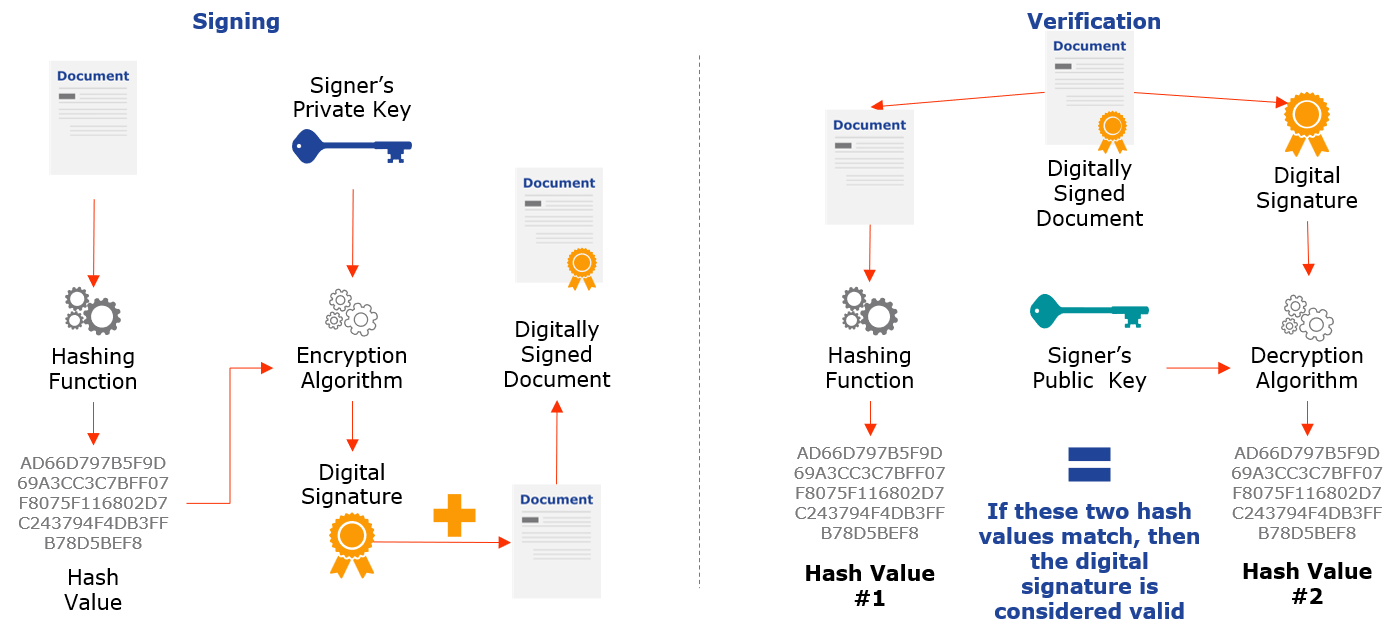
Digital Signature (Signing / Verification)
Certificate-Based Authentication
Certificate-based authentication uses a digital certificate to identify a user, machine, or device.
Authentication is performed before access is granted to a resource, network, or application.
For human identities, it is used together with other authentication methods such as passwords, biometrics, and one-time passwords (OTP).
The distinctive feature of this method is that it can serve as a single authentication solution for all types of users, unlike some solutions that work only for human users.
Certificate-based authentication is based on answers to four questions. If any answer fails, authentication fails and access is denied.
- Was the certificate issued by a trusted certificate authority?
- Are the intermediate and root certificate authorities trusted?
- Are the intermediate and root certificate authorities trusted?
- What is the certificate’s expiration status?
- What are the certificate’s issue and expiration dates?
- What are the certificate’s issue and expiration dates?
- Has the certificate been revoked?
- Has the certificate been revoked for any reason?
- Has the certificate been revoked for any reason?
- Has the user provided proof of possession of the certificate?
- Has the user proved that they possess the private key associated with the certificate?
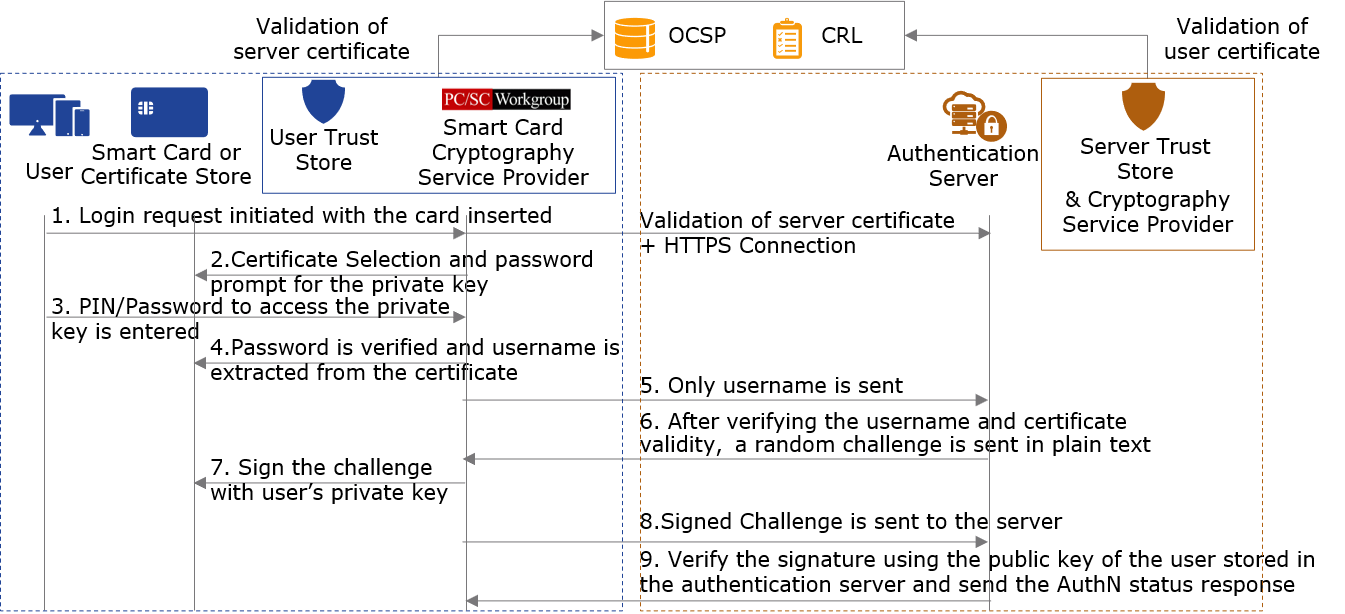
Smart Card Logon and Authentication
- Smart card logon is a type of certificate-based authentication.
- A smart card is a small computer without a screen or keyboard. It combines a microprocessor, memory, and applications.
- It can perform cryptographic operations such as encryption, decryption, signing, hashing, and key-pair generation within the card.
- It is an integrated-circuit card that complies with ISO/IEC 7810 ID-1, 7816, and 14443 standards.
- It provides a secure place to store valuable information such as private keys, digital certificates, account numbers, passwords, and personal information.
- The private key always remains securely stored on the smart card.
- Only the public key and digital certificate may be shared.
Smart Card Logon Use Cases
- National identity
- National identity cards
- Electronic passports
- Driver’s licenses
- Health insurance cards
- Digital signatures

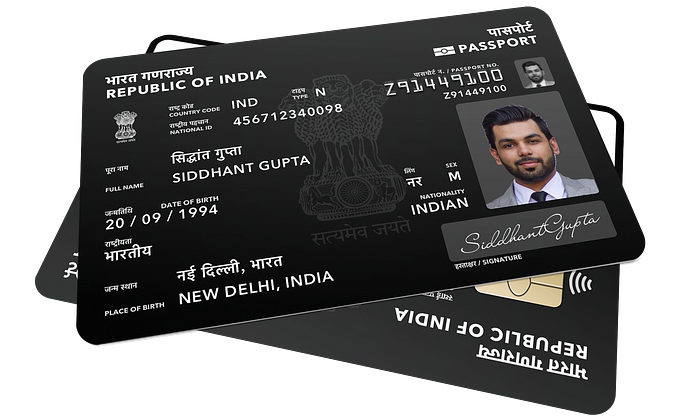
Image Credit: https://medium.com/gupta-siddhant/
- Organization or university identity cards
- Secure user logon and authentication for computers, networks, applications, and email
- Storage of digital certificates, credentials, and passwords
- Encryption of sensitive data
- Storage of biometrics
- Access to buildings, rooms, and parking areas
- Attendance and time logging
- Commercial applications
- Banking, including debit and credit cards, and payment services
- Secure business-to-business (B2B) and business-to-consumer (B2C) e-commerce transactions
- Customer loyalty and discount services
- Ticket and admission pass sales
- Parking payments and toll collection
- Secure Subscriber Identity Module (SIM) and authentication